Frequently Asked Questions
-
Many people, especially Mesopotamian students and scholars, have observed that Egypt seems to have received so much more attention in our world today. This may be surprising in light of how the traditions of ancient Mesopotamia have influenced Judeo-Christian heritage perhaps to an even greater degree than ancient Egypt.
I will speculate as to several reasons for “Egyptmania” and not so much for “Mesopotamiamania”.
First, the monumental remains from the Egyptian dynasties are profound, whereas dramatic physical evidence from Mesopotamia pales in comparison. The dry climate and sand have protected much of antiquity in Egypt, whereas there are fewer and less dramatic remains, especially in Southern Mesopotamia due to the lack of stone and because of the wetter climate.
In Egypt it is not only the pyramids from the Old Kingdom, but the fact that many temples and burial sites have remained fairly intact. Of course, grave robbery and desecration have been extensive but much still has remained. Many artifacts were removed (“looted”) by a host of government and private excavators. For example, Napoleon sponsored 167 scholars, engineers and architects to travel to Cairo in 1798 to study Egyptian ancient artifacts and culture.
Archaeologists in recent years have done a marvelous job excavating and in some cases reconstructing ziggurats in cities like Nineveh, Nipur, Ur and Uruk. However, the physical structures across the ages of use, disuse, reconstruction and erosion make them more complicated to coherently visualize. Plus, they are more remote than, say, the pyramids outside of Cairo and the temples of Karnak. While the many Sumerian and Akkadian tablets are extensive, they are less dramatic to the general audience than the hieroglyphs and iconography that have been found in Egypt.
Second, it was during Napoleon's campaign that the Rosetta Stone was discovered and provided the catalyst to unlock the meaning of Egyptian hieroglyphs by Jean-François Champollion and Thomas Young. It was about 50 years later when cuneiform began to be deciphered from the Behistun Inscription by Georg Friedrich Grotefend, Henry Rawlinson, Edward Hincks and other scholars.
Third, through many dynastic changes and foreign occupation, the pharaonic culture, religion and artistry of Egypt stayed relatively intact through millennia when compared to Mesopotamia.
Finally, the dramatic uncovering of Tutankhamun’s tomb by Howard Carter in 1922 captured the imagination of people around the world like few other archaeological discoveries. During the intervening years, people visited traveling exhibits. Modern art, architecture and fashion was influenced by Egyptian style. Hollywood took advantage and reinforced Egyptmania through many movies such as Cleopatra. We do not see many movies about Mesopotamian rulers.
-
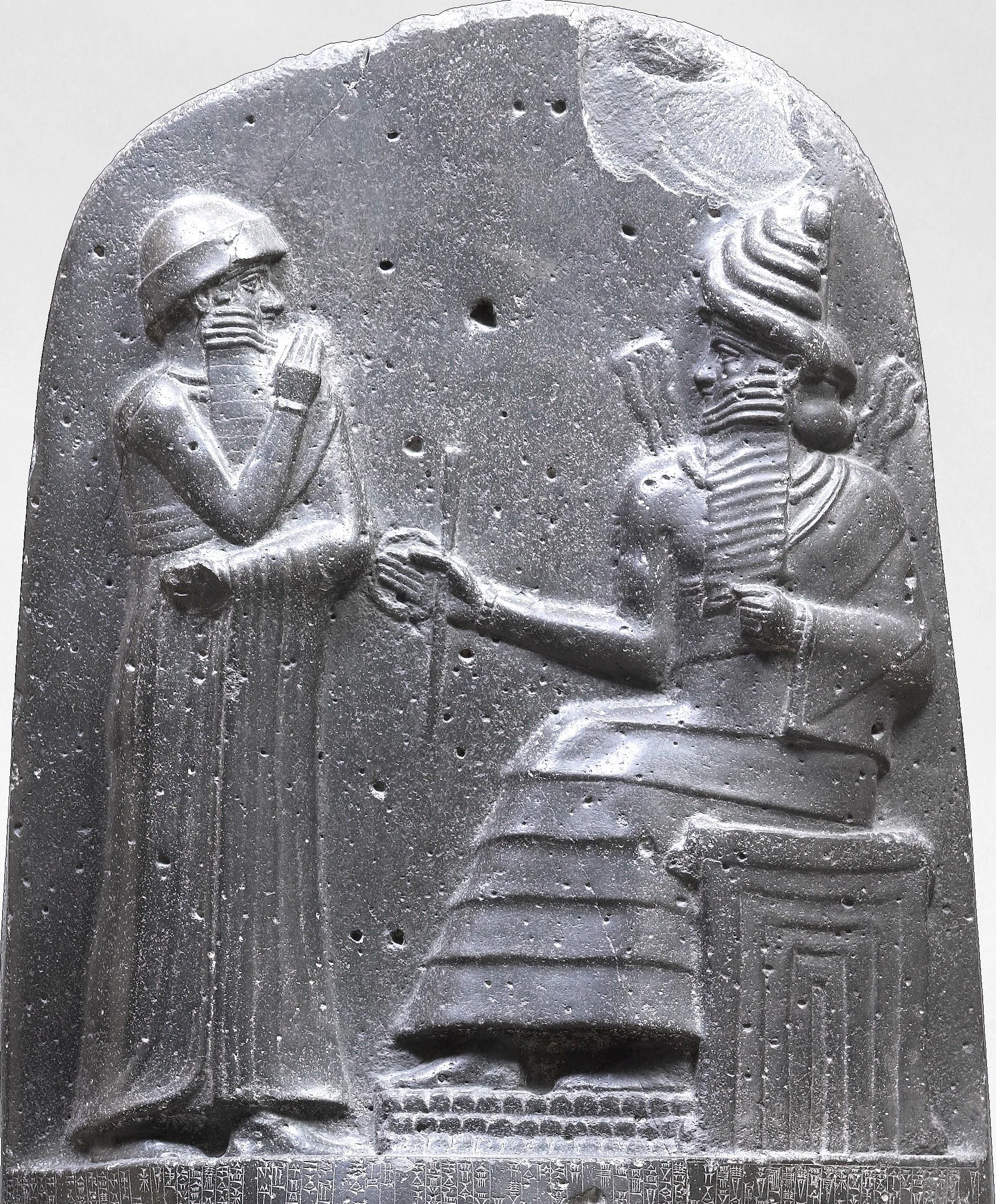
Hammurabi indeed was not the first king in Mesopotamia that memorialized law codes. Most scholars consider the Code of Ur-Nammu, by the king of the Sumerian city of Ur in the 21st century BCE, as the first written law code. Later codes, but still predating Hammurabi, include the Laws of Eshnunna, attributed to King Dadush around 1930 BCE, and the Code of Lipit-Ishtar, attributed to the king of Isin around 1870 BCE.
All of these codes had a similar structure:
The Prologue whereby the king explains why he was authorized by the gods to bring justice. Also, many military and diplomatic achievements extolling the king’s magnificence are typically noted.
The Laws which are based on talionic principles. That is, if Person X does something to Person Y, then Z happens.
The Epilogue whereby blessings are bestowed to those obeying the law and repercussions are meted out to those ignoring them.
All of the codes address to some degree the topics of false testimony, assault, theft, commercial and agricultural relationships, kinship, military service and weights and measures. The Code of Hammurabi is special because they are much more comprehensive than the earlier codes, with about 280 codes as compared to between 50 and 60 codes comprising the earlier efforts. Also, besides being shorter and less complete, the tablets of the earlier codes are less fully preserved than those in Hammurabi’s stele.
-
It is understandable to be confused because there really are three different definitions. First, they were the ancient people who lived in Northern Mesopotamia who at times were among the most powerful empires in the region and possibly the world. The name was derived from the ancient capital city, Ashur.
At times, the entire region of Mesopotamia is referred to as Assyria, scholars who study ancient Mesopotamia are called “Assyriologists”. The Akkadian and Sumerian dictionary which includes Old Babylonian and other dialects of the region is referred to as the “The Assyrian Dictionary of the Oriental Institute (now ISAC) of the University of Chicago”.
Finally, some modern people refer to themselves as Assyrian. They may or may not be direct descendants of the ancient Assyrians, but they identify culturally and historically.
-
It is easy to identify codes that are archaic because we do not statutorily identify people belonging to free, common and slave classes. Of course, in practice discrimination does exist but most of us believe that it should not. For example, Hammurabi delineates the punishment for striking another person by the class of the victim.
Hammurabi’s Code §202: If an awῑlum (free person) should strike the cheek of an awῑlum who is of status higher than his own, he shall be flogged in the public assembly with 60 stripes of an ox whip.
Hammurabi’s Code §203: If a member of the awῑlum-class should strike the cheek of another member of the awῑlu-class who is his equal, he shall weigh and deliver 60 shekels of sliver.
Hammurabi’s Code §204: If a muškēnim (commoner) should strike the cheek of another muškēnim, he shall weigh and deliver 10 shekels of silver.
Hammurabi’s Code §205: If an awῑlum’s slave should strike the cheek of a member of the awῑlum-class, they shall cut off his ear.
Another of the many examples of the anachronism of the time of Hammurabi includes the following:
Hammurabi’s Code §2: If a man charges another man with practicing witchcraft but cannot bring proof against him, he who is charged with witchcraft shall go to the divine River Ordeal, he shall indeed submit to the divine River Ordeal; if the divine River Ordeal should overwhelm him, his accuser shall take full legal possession of his estate; if the divine River Ordeal should clear that man and should he survive, he who made the charge of witchcraft against him shall be killed; he who submitted to the divine River Ordeal shall take full legal possession of his accuser’s estate.
-
The idea of aiding and abetting a criminal was true in Hammurabi’s time as it is today, though admittedly in the following examples the modern Reader might consider the punishment a bit extreme.
Hammurabi’s Code §16: If a man should harbor a fugitive slave or slave woman of either the palace or of a commoner in his house and not bring him out at the herald’s public proclamation, that householder shall be killed.
Hammurabi’s Code §108: If a woman innkeeper should refuse to accept grain of the price of beer but accepts (only) silver measured by the large weight, thereby reducing the value of beer in relation to the value of grain, they shall charge and convict that woman innkeeper and they shall cast her into the water.
Some of the commercial codes are quite applicable and are reflected in the drafting of contracts today. For example:
Hammurabi’s Code §104: If a merchant gives a trading agent grain, wool, oil, or any other commodity for local transactions, the trading agent shall return to the merchant the silver for each transaction; the trading agent shall collect a sealed receipt for each payment in silver that he gives to the merchant.
Hammurabi’s Code §106: If the trading agent takes silver from the merchant but then denies the claim of his merchant, that merchant shall bring charges and proof before the god and witnesses against the trading agent concerning the silver taken, and the trading agent shall give to the merchant threefold the amount of silver that he took.
Finally, in light of the most recent events that took place on January 6, 2020, in D.C., this one of Hammurabi’s viewpoint might have some merit for some Americans.
Hammurabi’s Code §6: “If a man steals valuables belonging to the god or to the palace, that man shall be killed, and also he who received the stolen goods from him shall be killed.”
-
Dr, Martha Roth from ISAC has suggested that all of these ancient legal codes, including that of Hammurabi, should be characterized as law “collections” rather than codes because they were not used statutorily applied as we think of legal precedent today.
Unlike today’s legal statutes, the collections explicitly address a broader set of concerns tied to society, kinship and religion.
-
Of course, the well-known epic of Gilgamesh who sought immortality must be at the top of his list. His fighting of the bull, killing of Humbaba in the forest, friendship with Enkidu, Atraḫasis and the flood story-within a story-that preceded Noah. Much of the struggles of Gilgamesh could be attributed to the rejection of Ishtar who then coaxed Anu to send down the Bull of Heaven to torment him. Though never interacting directly,
Ishtar who was the sister of Shamash is perhaps the most interesting character of the Mesopotamian pantheon so we must focus on some of her stories. She is the goddess of love, war and fertility and it is interesting that one divine individual could encompass all of these elements. Every male, be they god or man, should be cautious when engaging Ishtar. I have heard more than one scholar refer to her as the divine harlot (or vixen) of Mesopotamia. Besides her treatment of Gilgamesh, there seemed to be no end to the trouble she caused.
In the myth Inanna (Ishtar’s Sumerian name) and Enki, she tricked the god Enki by getting him drunk into giving her the mes which governed the cosmic balance. Though it is unclear whether these ever were recovered fully, Inanna brought the mes to Uruk and it is assumed that the balance was restored.
In the Descent of Ishtar into the Underworld, Ishtar, out of curiosity decides to travel and confront the queen of the underworld – a place very dark and bleak - who is her sister Ereshkigal. After passing through seven gates where she must serially remove her clothing, she is stripped entirely of her life force. As a result, the world above loses all forms of sexuality and fertility. The god, Ea, was sent from the heavens to revive Ishtar. She would be allowed to ascend but only if she finds a substitute. Ishtar or demons (it is unclear which) chooses a replacement which happened to be Dumuzi, Ishtar’s consort who had been mourning his loss, to take her place. Dumuzi tried to escape this fate, but was unsuccessful. Thus, symbolically, this myth represents the cycles of the seasons.
-
I studied anthropology and history in school before my career choice of finance and investments. What always has been fascinating to me is how the judiciary system, regulatory system, religion, politics, commerce and social norms interact to create a community. When I travelled abroad for my job, I always stopped to try to assess the gestalt of foreign countries. Some of my consulting work in economic development necessitated this approach.
Once I retired full-time from my investment career, I had time to immerse myself in the study of the ancient near east. I was fortunate to work at The University of Chicago and became immersed in the Institute for the Study of Ancient Cultures (ISAC). I became a docent and always loved to engage students in the physical and philological elements of the ISAC museum’s life size replica of the Code of Hammurabi. Writing my book was a natural outgrowth of my docent tours and imagination.